Biomass · Carbon Materials · Energy Storage

Building Resilient
Energy From the
Ground Up.

Advancing biomass-derived carbon materials and energy storage technologies designed for a stronger, more resilient energy future.

Current Stage Materials R&D
Primary Chemistry Sodium-Ion Focus
Target Market Stationary Storage
0% Global graphite processing concentrated in China (IEA)
0GWh Projected global stationary storage demand by 2030 (IRENA)
0× U.S. energy storage market growth projected this decade (BloombergNEF)
0% Domestic biomass feedstock focus — agricultural & forestry waste
The Challenge

Energy Independence
Starts with Materials.

The global energy transition requires advanced materials at scale. Today, critical inputs for energy storage are heavily concentrated in a small number of overseas suppliers — creating strategic vulnerabilities for communities, utilities, and national infrastructure.

Supply Chain Concentration

According to the IEA, approximately 79% of the world's graphite supply is processed in China. Battery-grade graphite supply chains remain highly concentrated geographically, creating potential bottlenecks for domestic energy storage deployment.

79% overseas graphite processing

Grid Vulnerability

Aging grid infrastructure, increasing extreme weather events, and growing demand are straining energy systems across the country. Communities — particularly rural and underserved ones — face mounting exposure to prolonged outages.

83% of U.S. major outages weather-related (DOE)

Growing Storage Demand

As renewables expand, the need for flexible, reliable stationary energy storage is growing rapidly. Industry analysts project global stationary storage demand to reach over 1,200 GWh by 2030 — requiring materials at a scale that current supply chains may struggle to meet.

1,200 GWh projected demand by 2030 (IRENA)
The Opportunity

America's Energy Future
Requires New Approaches.

XOL Industries is focused on developing biomass-derived carbon materials and energy-storage technologies that may help reduce dependence on overseas supply chains while supporting community-scale resilient energy infrastructure.

  • Domestic Sourcing

    Researching carbon material pathways derived from domestic biomass feedstocks — agricultural and forestry waste available across the United States.

  • Community Resilience

    Exploring stationary storage applications for schools, hospitals, utilities, and rural communities — the infrastructure that matters most during disruptions.

  • Advanced Carbon Materials

    Developing and characterizing biomass-derived carbon materials with potential applications as anode materials in next-generation energy storage systems.

  • Stationary Storage Focus

    Concentrating on stationary storage — grid-edge, microgrid, and community-scale applications where safety, longevity, and domestic supply are prioritized.

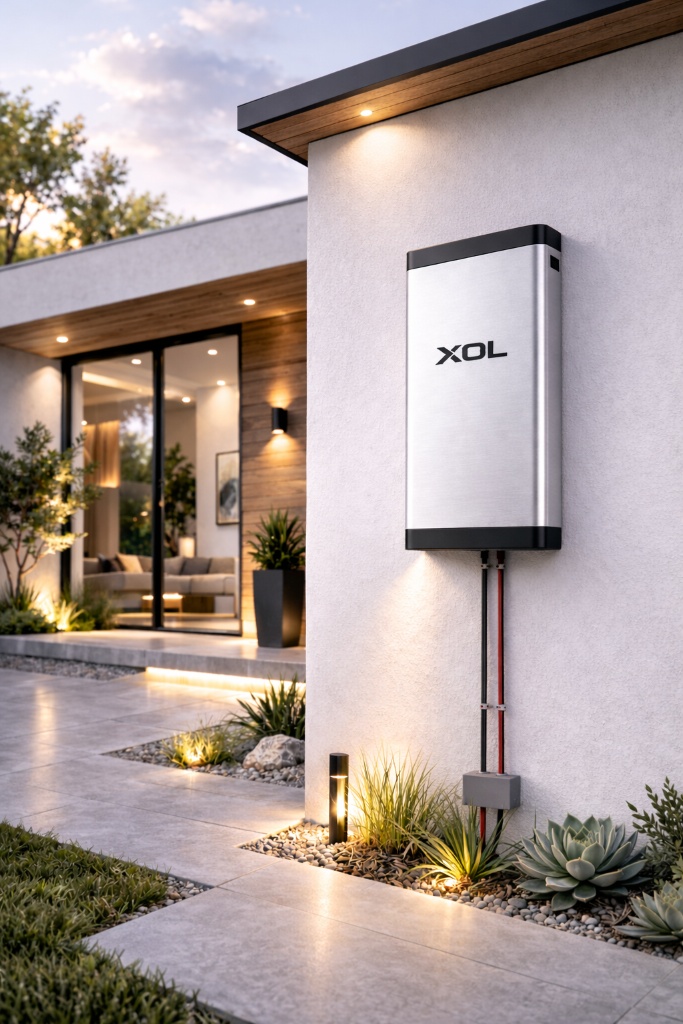
XOL energy storage unit installed on modern home exterior
Energy Storage
Technology

From Biomass
to Resilient Infrastructure.

XOL Industries is researching a development pathway that starts with domestic biomass feedstocks and targets stationary energy storage applications.

01

Biomass Feedstocks

Agricultural residues and forestry byproducts serve as the primary raw material — widely available, renewable, and domestically sourced across the United States.

02

Pyrolysis & Activation

Through controlled thermal processing, biomass is converted into biochar — a porous carbon material. Activation steps are explored to develop the properties relevant to energy storage applications.

03

Carbon Materials R&D

The resulting carbon materials are characterized and refined — targeting the structural, chemical, and electrochemical properties that could make them viable anode candidates for sodium-ion and related chemistries.

04

Stationary Storage

The intended end application is stationary energy storage — community microgrids, grid-edge deployment, and critical facility backup — where domestic supply chains and safety profiles are especially valued.

Focus Area: Sodium-Ion Chemistry

Industry data shown for context. XOL's own performance characteristics are under development.

Biochar: The Starting Point

Biochar is a carbon-rich material produced by heating biomass in a low-oxygen environment — a process called pyrolysis. XOL is researching the properties of biochar derived from various domestic feedstocks as a potential precursor to battery-grade carbon anode materials.

Biochar's natural porosity and carbon content make it an interesting candidate for further processing toward energy storage applications — particularly for sodium-ion chemistries that may be better suited to hard carbon structures than conventional graphite.

  • Derived from renewable domestic biomass
  • Porous carbon structure
  • Feedstock available at scale across the U.S.

Carbon Material Development

Raw biochar requires additional processing — activation, purification, and structural tuning — to achieve the electrochemical properties needed for energy storage. XOL is researching these development pathways, characterizing materials at each stage.

The goal is to produce hard carbon materials with controllable microstructure, surface chemistry, and capacity-relevant properties — potentially applicable as anode materials in sodium-ion and related battery systems.

  • Activation & surface engineering under study
  • Electrochemical characterization ongoing
  • Targeting hard carbon microstructure

Sodium-Ion: A Focus Area

XOL's material development is oriented toward sodium-ion battery chemistries — an emerging technology area that uses sodium rather than lithium as the charge carrier. Sodium is abundant domestically and does not require the same scarce mineral supply chains as lithium-ion.

Hard carbon — the material class XOL is researching — is the primary anode candidate for sodium-ion systems. Industry researchers have noted sodium-ion's potential advantages for stationary storage, where cycle life, safety, and supply chain security are prioritized over energy density. Performance and timelines are subject to ongoing research.

  • Sodium: domestically abundant feedstock
  • Hard carbon as primary anode candidate
  • Stationary storage application focus

Stationary Storage: The End Market

XOL's technology development is focused on stationary storage applications — grid-edge systems, community microgrids, and critical facility backup — rather than electric vehicles. Stationary applications favor different trade-offs: safety, longevity, and supply chain resilience over maximum energy density.

This is where biomass-derived hard carbon and sodium-ion chemistry may offer the most differentiated value: domestically sourced, potentially safer chemistry profiles, and suitability for the long-cycle-life demands of infrastructure-grade storage.

  • Grid-edge & community microgrid focus
  • Critical facility backup applications
  • Infrastructure-grade longevity requirements
Development Roadmap

A Clear Path From
Lab Evidence to Deployment.

XOL's work is staged around evidence: characterize feedstocks, tune carbon materials, validate electrochemical behavior, then translate promising results into stationary-storage system architecture.

01

Feedstock Screening

Compare agricultural and forestry residues for carbon yield, consistency, and processing suitability.

Active
02

Carbon Processing

Refine pyrolysis, activation, and purification pathways for hard-carbon material development.

Active
03

Cell-Level Validation

Test electrochemical properties and compare results against stationary-storage requirements.

Next
04

System Architecture

Translate materials findings into storage module design for homes, facilities, and microgrids.

Planned
Carbon Materials

Biochar:
Nature's Carbon,
Engineered for Energy.

Biochar is a porous, carbon-rich material produced from biomass through pyrolysis. XOL Industries is researching biochar-derived carbon materials as potential anode precursors for next-generation energy storage systems.

What makes biomass-derived carbon interesting is its domestic abundance, renewable feedstock base, and natural microstructure. Agricultural residues — corn stover, wood chips, rice husks — are available at scale across the United States and represent a potential pathway to a more domestically rooted energy storage supply chain.

XOL's research focuses on understanding and controlling the structural and chemical properties of these materials through processing — targeting the hard carbon characteristics that sodium-ion chemistries require.

Renewable Feedstock
Domestically Sourced
Tunable Microstructure
Hard Carbon Target
Supply Chain

The Case for
Domestic Sourcing.

Today's energy storage supply chain runs through a small number of geographies. XOL is focused on developing materials from feedstocks available here at home.

Current State

Concentrated & Imported

  • Battery graphite: ~79% processed overseas (IEA)
  • Critical mineral supply concentrated in few countries
  • Long, complex international supply chains
  • Exposure to geopolitical and logistical disruptions
  • Limited domestic processing infrastructure
XOL's Direction

Domestic & Renewable

  • Biomass feedstocks available across the U.S.
  • Agricultural and forestry waste as raw material
  • Shorter, more transparent supply chains
  • Renewable and replenishable feedstock base
  • Potential to support rural economic activity

Industry data sourced from IEA World Energy Outlook. XOL's material development is ongoing; commercial products have not been announced.

Community Impact

Infrastructure That
Serves Everyone.

XOL is developing energy storage technology with a specific focus on applications that serve communities — not just utilities. Resilient energy infrastructure means keeping critical services running when the grid cannot.

Schools

Keeping schools powered and safe during outages — protecting students and serving as community refuge centers in emergencies.

Hospitals & Clinics

Uninterruptible power for medical facilities — where energy resilience is directly tied to patient safety and community health.

Water & Utilities

Water treatment plants, wastewater systems, and public utilities require reliable power to function — even when the broader grid is stressed.

Rural Communities

Rural areas often face the longest outage durations. Stationary storage can serve as the backbone of community microgrids that provide local energy independence.

How a Community Microgrid Works

A simplified illustration of energy flow in a storage-enabled community microgrid.

Solar / Renewables
Energy Storage
Community Microgrid
Schools
Hospitals
Homes
Utilities
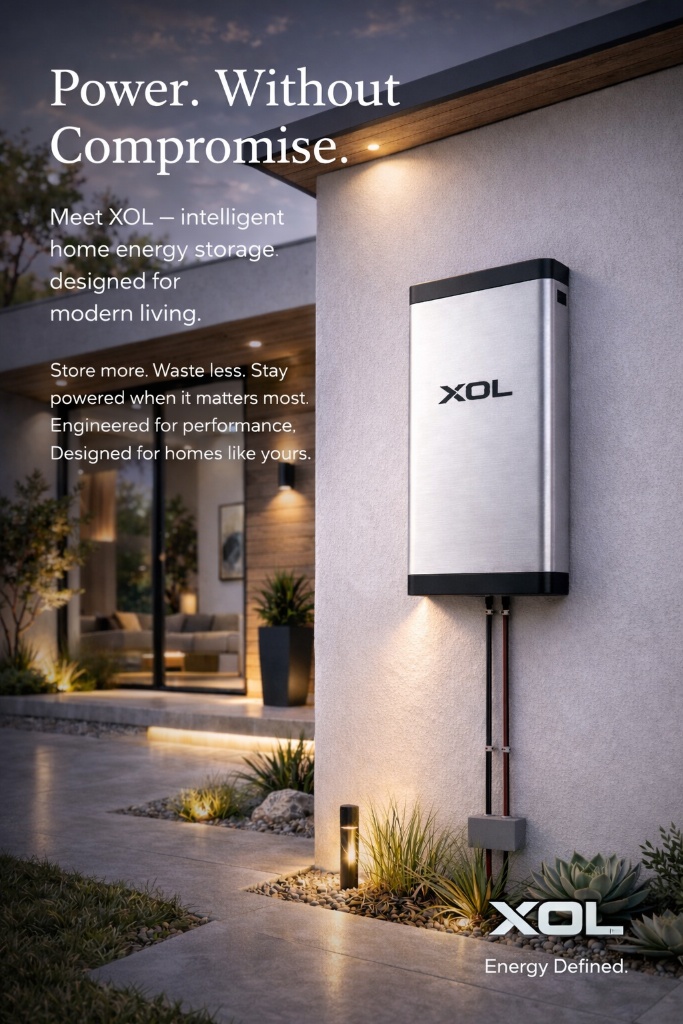
XOL energy storage unit — product advertisement
The Product Vision

Designed for
Homes & Communities.

XOL is developing a wall-mounted stationary storage unit built around its biomass-derived carbon material research — intended for residential, commercial, and community-scale deployment.

The design philosophy is simple: robust, clean, and purpose-built for the environments where it matters most. From single-family homes to community microgrid nodes, XOL's approach focuses on practical resilience over performance spectacle.

Safety-first stationary architecture
Grid-edge and backup power use cases
Domestic material supply chain focus
Evidence-based performance roadmap
Market

A Large & Growing
Opportunity.

The stationary energy storage market is expanding rapidly — driven by renewable integration, grid modernization, and growing demand for energy resilience at every scale.

0GWh
Projected global stationary storage demand by 2030
Source: IRENA
0×
U.S. energy storage market growth projected this decade
Source: BloombergNEF
0%
Global graphite processing currently concentrated overseas
Source: IEA World Energy Outlook
0M+
Acres of U.S. agricultural land producing biomass byproducts annually
Source: USDA

All figures are third-party industry data cited for context. They are not XOL's projections or guarantees of market opportunity. Actual market conditions may differ materially.

Leadership

The Team Behind
the Mission.

XOL Industries is a woman-owned company co-founded by three professionals united by a conviction that domestic energy resilience is both necessary and achievable — bringing together strategy, science, and engineering under one roof.

Woman-Owned Business
Sarai Garrett — Co-Founder & CEO of XOL Industries

Sarai Garrett is Co-Founder and CEO of XOL Industries. She leads the company's overall strategic direction, investor relations, and stakeholder development — building the organizational foundation needed to bring domestically sourced energy storage materials to market. As the company's founding leader, Sarai drives XOL's mission of combining commercial ambition with a genuine commitment to community resilience.

Sarai Garrett

Co-Founder & CEO

Strategic leadership, investor relations, and stakeholder development. Driving XOL's mission from the ground up.

Carl Martel — Co-Founder & Chief Science Officer of XOL Industries

Carl Martel is Co-Founder and Chief Science Officer at XOL Industries. He leads the company's carbon materials research program — overseeing feedstock selection, pyrolysis and activation studies, electrochemical characterization, and the scientific roadmap toward battery-grade hard carbon anode materials. Carl's approach is rigorous and evidence-based: XOL claims only what its research supports.

Carl Martel

Co-Founder & Chief Science Officer

Carbon materials research, biomass pyrolysis, electrochemical characterization, and scientific roadmap.

Ramon Granados — Co-Founder & Chief Engineer of XOL Industries

Ramon Granados is Co-Founder and Chief Engineer at XOL Industries. He leads the company's engineering development program — translating materials research into product architecture, overseeing system design for stationary storage applications, and managing XOL's technology development partnerships. Ramon bridges the gap between laboratory science and deployable energy infrastructure.

Ramon Granados

Co-Founder & Chief Engineer

Engineering development, system design for stationary storage, and technology-to-product translation.

Investor Center

Investing in
Domestic Resilience.

XOL Industries is in early-stage development and is actively engaging investors who share a conviction in the importance of domestic energy storage materials and resilient community infrastructure.

Investment Thesis

01
Supply Chain Urgency

Energy storage supply chains are geographically concentrated. Domestic alternatives are a national priority with growing policy and market tailwinds.

02
Abundant Domestic Feedstock

Biomass-derived carbon precursors are available at scale across the United States, offering a potential cost and supply chain advantage over imported graphite.

03
Large & Growing End Market

Stationary storage is one of the fastest-growing segments in energy infrastructure. The market is projected to grow significantly over the next decade (IRENA, BloombergNEF).

04
Early-Stage Entry

XOL is at an early stage of development — presenting an opportunity to participate in building domestic energy storage materials capacity from the ground up.

Access Investor Materials

Frequently Asked Questions

What is XOL Industries?

XOL Industries is an early-stage company developing biomass-derived carbon materials and energy-storage technologies focused on domestic supply chains and stationary storage applications. XOL is not a battery manufacturer — the company's focus is on the carbon anode material layer of the supply chain, and on the development and characterization of biomass-derived hard carbon materials.

Why carbon materials?

Carbon anode materials are a critical component in energy storage systems. Today, battery-grade graphite is overwhelmingly sourced and processed overseas. Biomass-derived hard carbon represents a potential pathway to a domestically sourced alternative — particularly for sodium-ion chemistries that may be better suited to hard carbon than to conventional graphite.

Why stationary storage?

Stationary storage — community microgrids, grid-edge systems, critical facility backup — is the market segment where XOL's material approach may offer the most differentiated value. Unlike electric vehicles, stationary applications prioritize safety, longevity, and supply chain security over maximum energy density — trade-offs that may favor sodium-ion and domestically sourced hard carbon.

Why energy resilience?

Energy resilience — the ability of communities to maintain power during grid disruptions — is increasingly recognized as a critical infrastructure challenge. Climate-driven extreme weather, aging grid infrastructure, and growing demand are all increasing outage frequency and duration. Stationary storage is a core enabling technology for resilient community energy systems.

What markets is XOL pursuing?

XOL's primary focus is the U.S. stationary energy storage market — specifically applications serving communities, critical infrastructure, and grid-edge deployment. Secondary interest areas include industrial and commercial backup power. XOL is in early development and has not announced commercial products or partnerships.

What differentiates XOL?

XOL's differentiation strategy centers on: (1) domestic biomass feedstocks as the raw material base, (2) hard carbon material development targeting sodium-ion chemistry, (3) a stationary storage application focus where supply chain security is prioritized, and (4) a commitment to evidence-based development — no performance claims beyond what testing supports. The company is building the materials layer of domestic energy storage supply chains.

Ready to Learn More?

Access XOL's investor materials, review our technology overview, and connect with the team.

Contact

Let's Build
Something Important.

XOL Industries welcomes inquiries from investors, strategic partners, researchers, and community organizations aligned with our mission.

Investors For investment inquiries and access to materials, use the Investor Portal or reach out directly.
Partners We are interested in research collaborations, feedstock supply partnerships, and technology development alliances.
Media For press inquiries, please use the contact form and note your outlet and deadline in the message.